Teaching respect requires patience
As with the many aspects of helping children with special needs navigate life, teaching respect requires patience, consistency, and an approach tailored to each child’s abilities and understanding. It’s not a one-time lesson – it’s a process that will grow with your child.
Respect is a learnt skill that includes recognising others’ feelings, following social boundaries, and treating people, animals, environments – and yourself – with care. It is the foundation of how we understand and connect with others, and how we move through the world.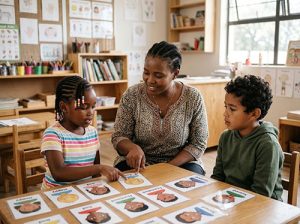
A start is being a respectful parent. Children often learn more from what adults do than from what they say. Demonstrating kindness, using polite language, listening attentively, and showing consideration in everyday interactions provide an example for children to follow.
Breaking respect into simple actions is especially helpful because abstract ideas can be difficult to grasp. Teach your child to:
- say ‘please’ and ‘thank you’,
- wait for a turn when playing games,
- ask before borrowing
- understand the meaning of personal space
Visual supports, such as charts or pictures; stories; and role-playing, such as greeting a friend, asking for help, or dealing with frustration, help reinforce these behaviours and serve as reminders.
Consistency and routine are important because children with special needs usually thrive in structured environments where expectations are clear and predictable. Introduce respectful behaviour in your child’s daily routine. Greeting others, sharing, and tidying up help to reinforce the learning. Your consistent response to positive and negative behaviour also provide clarity. Praise and encouragement when a child shows respect always help reinforce the positive actions.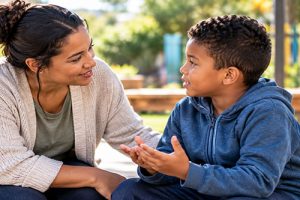
It is also important to teach emotional awareness. Helping your child recognise his/her feelings, as well as the feelings of others, lays the foundation for respectful behaviour. Recognising emotions in pictures or discussing how actions affect others, helps build empathy over time.
When children learn how to give and receive respect, they begin to understand what it means to feel safe, valued and heard. They also learn to listen, consider different opinions and express themselves in thoughtful and positive ways.
Challenges will arise. Correction should be calm and constructive. Explain the behaviour that was inappropriate and what could be done differently next time. Punishment doesn’t work. Highlighting mistakes and offering alternatives does, because it gives your child a practical way to improve.