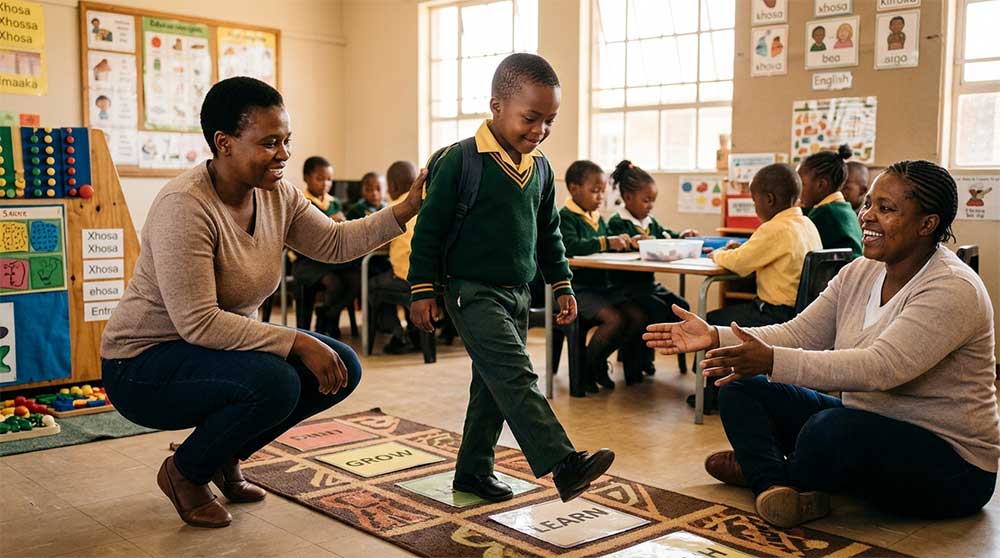
One small, meaningful step at a time
 Instilling courage in children with special needs involves building confidence. It also requires developing resilience, trust, and a sense of belonging. By courage we mean helping your child face everyday challenges such as trying something new, expressing him/herself, and battling with frustration. When children feel understood and supported, they are more likely to take brave steps forward – one small, meaningful step at a time
By celebrating small victories – and by you displaying mental strength – you will help your child with special needs build a positive self-image. This will lead your child to feel secure enough to take risks. Encouraging new experiences despite fear, breaking tasks into manageable steps, and understanding his/her daily struggles means you, the parent, are helping develop your child’s mindset.
Here are a few strategies that help build courage:
- Teach your child that failure is part of learning. This reduces anxiety and gives your child the courage to try again.
- Celebrate small milestones rather than only focusing on the outcome.
- Share stories about your own fears and how you push through them. This highlights that bravery does not mean being without fear.
- Acknowledge challenges that may seem small to others but are real for your child.
- Allow your child to make choices. This builds self-confidence and trust in his/her judgment.
- Keep praising your child’s strengths and unique talents.
- Make sure your child feels deeply loved and accepted for who he/she is.
- Help your child tackle challenges with a calm and determined mindset.
- Group activities help develop social skills, peer confidence and the courage to participate.
Although confidence is at the heart of developing courage, the two are not the same. Confidence is the belief in one’s abilities, while courage is the willingness to act despite uncertainty or fear.